

Grateful? Express your appreciation!
Embracing the science of gratitude and power of appreciation.

During this season of thanks, today’s newsletter begins with a short video for you. I invite you to take a moment to enjoy.
Gratitude leads to appreciation
As a child, my mom taught me the basics of weaving, just one of many textile art forms she practiced. To create a tapestry, one needs both the warp, the long vertical threads that run the full length of the piece, and the woof, the short horizontal threads that add color, texture, and depth. The warp is strung on the loom first and is the foundation for the woof to follow.
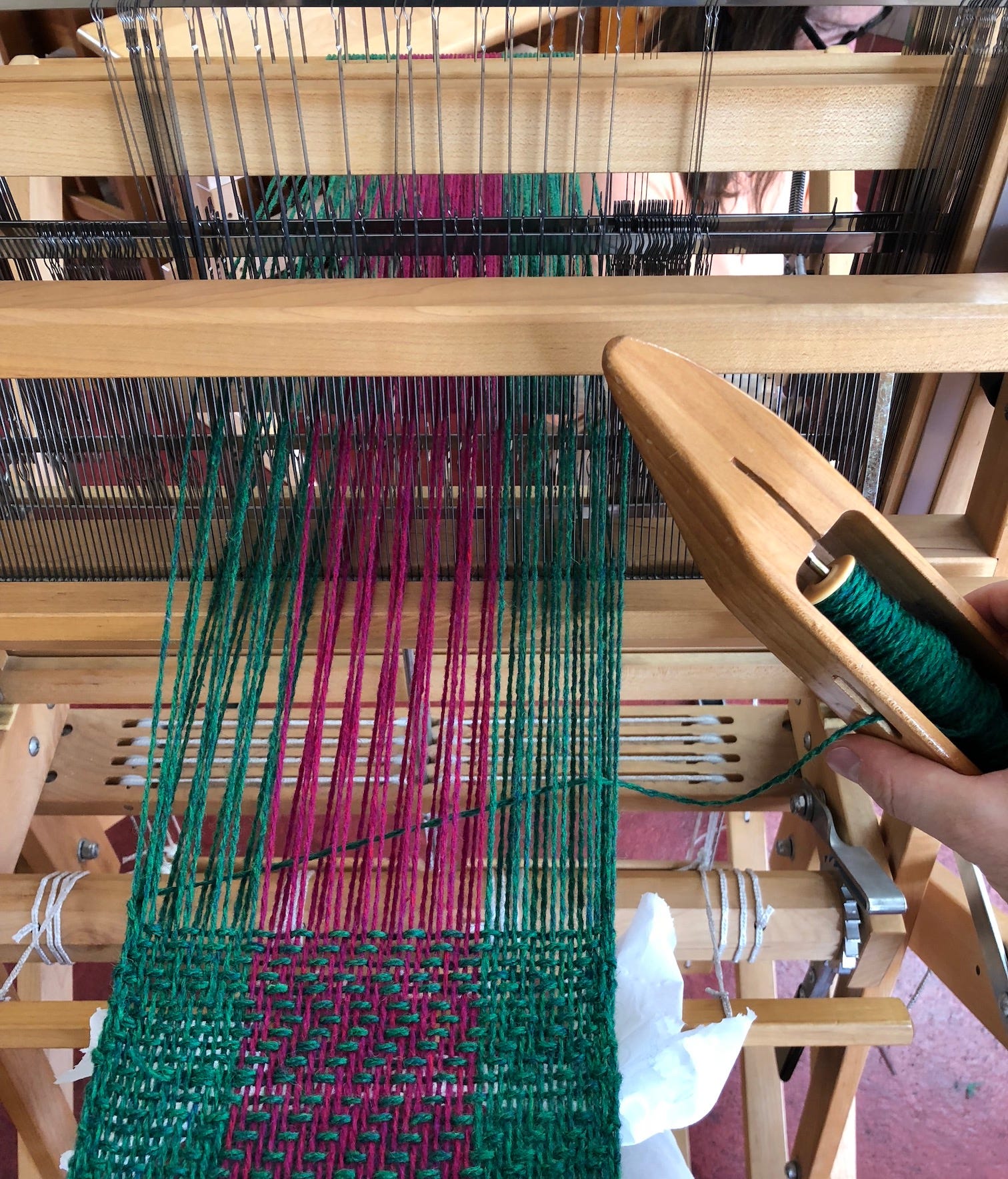
It’s much the same with gratitude and appreciation.
Gratitude is an internal response to something we receive or experience. Like the warp in weaving, it’s the foundation for an “attitude of gratitude” to carry us through the day. Many days, I will capture a list of items in my life for which I’m grateful. I then share that gratitude list with two or three friends. This ritual helps establish the foundation for my day.
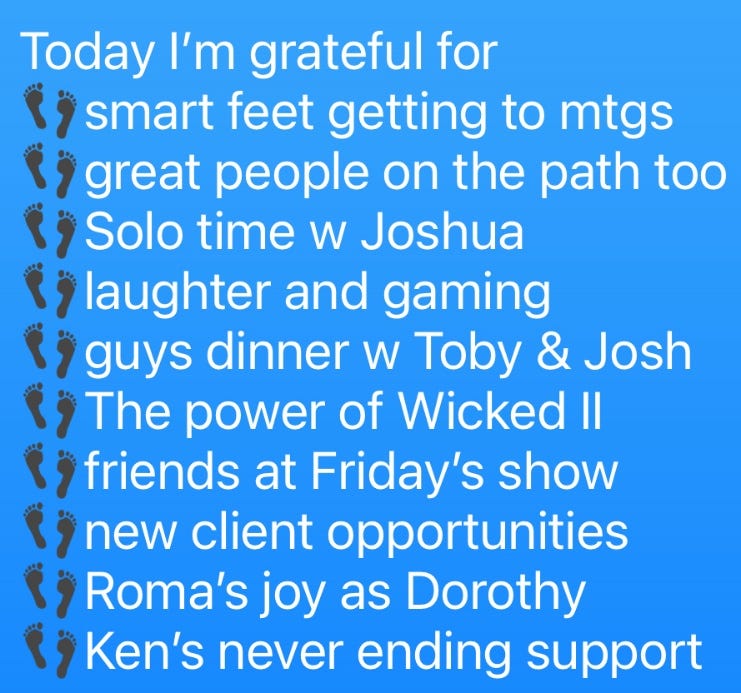
As the motivational writer William Arthur Ward says,
“Feeling gratitude and not expressing it is like wrapping a present and not giving it.”
Appreciation, on the other hand, is the outward expression of gratitude to another person. In that action, I both acknowledge the person but I also am somehow able to “own” a bit of their talent or gift for myself. As Voltaire said,
“Appreciation is a wonderful thing. It makes what is excellent in others belong to us as well.”
This great post, The Power of Choice: Gratitude vs. Appreciation, helped me better understand the nuance of this distinction. Plus, there’s some remarkable science behind these concepts.
The Science of Gratitude
Experiencing authentic gratitude and expressing sincere appreciation provides remarkable health benefits. It’s been shown to increase dopamine levels, create serotonin, and decrease cortisol.
Having gratitude as a foundation in our lives serves then as an “upstream regulator” of mood, focus, and resilience, providing a reservoir of strength in the moment to counteract overstimulation, frustration, and aggravation. Over time, it creates long-range health benefits. As the GLW Guide on Substack offers “Gratitude in this context is not sentimental, it’s regulatory.”
That research from the GLW Guide inspired me over the past month to dive deeper into this topic, but if you prefer a more playful view of this, check out the YouTube video below from Tremendousness:
The Power of Appreciation
My husband Ken often says, “What we appreciate, appreciates.” Practically speaking, I’ve seen this in my own life in real estate from my first apartment in the East Village to the two homes we’ve owned together in California. But it’s equally true of other qualities that we want to increase in our lives.
As I observe the beauty, talent, kindness, forgiveness, and generosity in others…and acknowledge it…I set myself up to receive even more of that.
There’s also a flip side to this point. What we depreciate, depreciates. Have you ever purchased and driven a car off the dealer’s lot and then tried to return it? You will immediately experience the financial effects of depreciation. Likewise, if I take an ill view of a colleague when I see an email from them or pull into the parking lot at work and see their car, I’m assuming the worst. I’m devaluing another person, before I ever encounter them, and I’m setting up a scenario of depreciation. In Recovery rooms, this practice is sometimes known as “Contempt prior to investigation.”
So.... If it’s in the power of our minds to bring forth either quality—appreciation or depreciation—why not bring forth the one that which best serves us and others?

As we walk through this week, when many in the U.S. celebrate Thanksgiving, I invite you to embrace gratitude and express appreciation. Perhaps in one of these simple actions:
Create a gratitude list (and share it with another).
Surprise somebody with an unexpected handwritten note of appreciation.
Slow down and just drink in the nature around you.
Seek out art, online or in a gallery, and simply appreciate the artist’s talent.
Fall asleep tonight, reflecting on what you’re grateful for from the day.
Let me know how it goes for you. I treasure comments in the discussion below as you explore these concepts. If you’d like more on this topic, I invite you to check out the Sunday lesson I delivered at Unity San Francisco on November 23. You can see the video here or simply listen to the podcast. I go into greater depth and share some stories of how the foundation of gratitude and expression of appreciation have been showing up in my life.
Talk of the Week
A joyful and vulnerable TEDx talk from my dear friend Roger Manix on how play can restore connection, courage, and well-being. He traces his own journey and shows how simple, low-stakes exercises can spark imagination and connection. His “family portrait” moment is worth the watch… it’s a beautiful reminder of how quickly play can break down walls and bring people together.
JD’s Recommendations: What I’m Reading, Hearing, and Viewing
Reading: 6 Ways to Foster Connection & Reduce Isolation Amidst Crisis from One Mind — a wonderful, insight-rich guide providing strategies for crisis prevention, preparation, response and recovery.
Hearing: Setting Your Partner Up for Success — This thoughtful conversation between the futurist Lisa K. Solomon and improviser Dan Klein explores how embracing failure, staying flexible, and lifting up others can lead to creativity and confidence.
Viewing: I couldn’t believe the end of this short clip — the visual jump from billions to trillions is almost unbelievable. I’ve shared with my kids to help them see exponential power (and the value of money!).
No matter how you like to acknowledge and celebrate this season of thanks, know that I appreciate you for reading and sharing my work.
Happy Thanksgiving,
jds
I am grateful for you and your whole family. Happy Thanksgiving.
I love the distinction between gratitude and appreciation, that was powerful for me when I discovered it myself during my intractable depression. I couldn't feel any gratitude. Trying made me feel worse. But I could still objectively identify things that were good and point them out—in my case, by drawing them and posting them online. I did so because I reasoned that it would be hard to be bitter and say everything sucks if I had a stream of art about real things that didn't suck. I was correct! It never helped me feel better while I was depressed, but it helped me become a person who noticed the good in the world and shared it with others, and that has been much more meaningful and enduring than positive feelings.