

Wanted: Courageous Communication
Especially when it might feel risky.

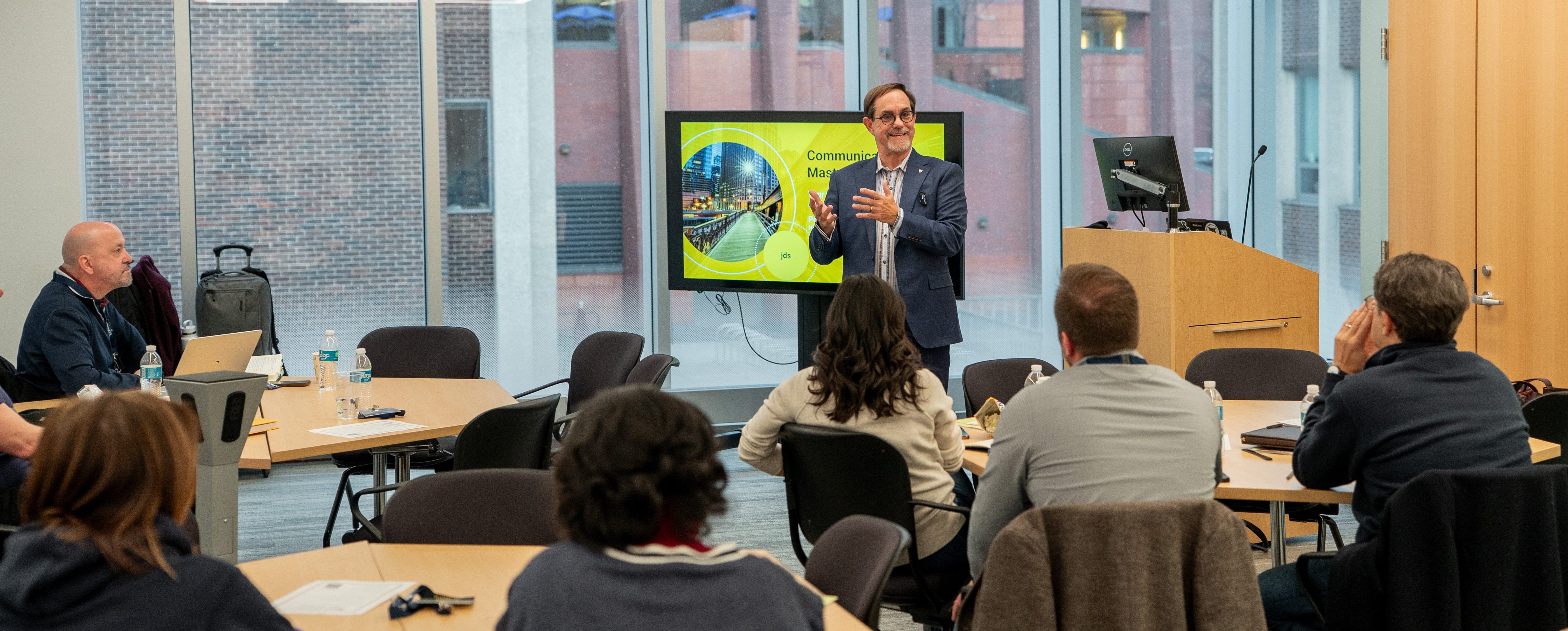
I recently had the privilege to work with two groups of higher education leaders, and I’m acutely aware of the demands they face in the current climate on our campuses. I like to cross-pollinate across all the schools where I teach, speak, and consult. I’ve taken many of the lessons below from peers who earned their doctorate in higher education leadership with me at the University of Pennsylvania. I then extended it through conversations with Aspen’s Rising Presidents Fellows.
Whether or not you work in the field of higher education, you are affected by cloudy communication. I invite you to read the full post and then share it with others who may benefit from these insights.
In the current challenging climate for communication, our students need more from us as communicators, as leaders, and as mentors. As I told my fellow graduates at Penn: “Now more than ever, we need to call our leaders to step up and step in.”
The clip above captures a moment where higher education leaders at Penn’s GSE and I explore the need today for communication mastery.
Through conversations with a wide range of academic leaders in the first few weeks of 2026, I see five clear struggles leaders, staff, and faculty must confront to communicate with mastery.
1.) Communication without courage: We often produce technically competent statements that may be so carefully worded that they lack the courage to express unpopular, unfinished, or dissenting ideas.
2.) The widening gap between our words and actions: Our students (just like our children) can quickly see the inconsistency of “do as I say, not as I do.” This was so aptly captured in the adage (incorrectly attributed to Emerson): “What you do speaks so loud, I cannot hear what you say.”
3.) The eroding trust in the value and relevance of higher education: If institutions can’t communicate their relevance clearly and with humility, others will define their value for them.
4.) Information discernment in a misinformation era: One of our greatest gifts is teaching our students how to evaluate sources, engage responsibly, and know when to disengage. This only happens with powerful discernment and clear role modeling.
5.) Intellectual discomfort is avoided, not designed. While trying to make our campuses a “safe space for all,” we may be missing the chance to allow, even invite, discomfort as we consider issues from other points of view. I gave my husband this two-sided pillow for his office as a pastor, and it is just as important as those of us who educate.

So, if that’s the diagnosis, what then is the solution?
All of us, from part-time adjuncts to senior administrators, from post-docs to professors, need to embrace courageous communication marked by authenticity, transparency, and commitment.
Courageous communicators speak and write in a way that is personal and authentic, not overly engineered, but real, even raw. We admit when we get it wrong, and we try again. On October 7, 2023, the awful day of violence in Gaza, the USC president released a hastily created statement that had to be retracted a few hours later when more information was available. The impact of admitting “We got this wrong” was powerful role modeling for the entire campus.
All parties benefit when leaders communicate in an audience-centered way, saying not what we think they “want to hear” but what we believe the audience “needs to hear.” And we show up again and again in office hours and town halls, to listen, connect, and continue the conversation.
Further, I was reminded by my academic peers of the need for committed listening to one another, even when we disagree, perhaps especially then. As two academics, Lyubomirsky and Reis, shared in the NY Times this week the secret to happiness may well be in our ability to truly listen. It’s not the “secondary element” of communication, it is its essence.
I believe courageous communication is needed in healthcare, non-profits, finance, public service, the armed forces…in literally every role and in every organization.
We need courageous communication marked by authenticity, transparency, and commitment. What might that make possible in your organization? I welcome your thoughts below in the comments.
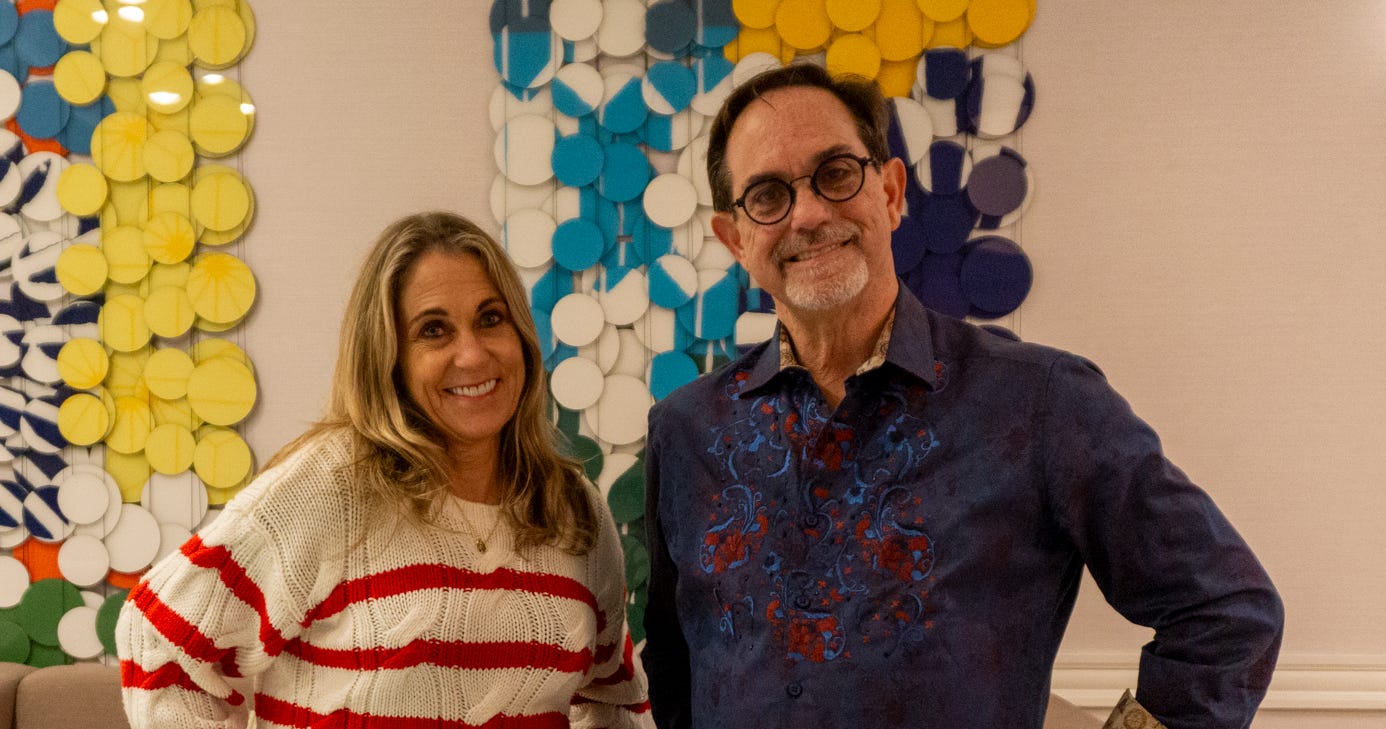
Courageous communication requires more than conviction. It requires access to your authentic voice, especially in moments of transition, fatigue, or uncertainty. I’m delighted to share that registration is now open for my next workshop at MEA’s Santa Fe campus at the end of August, where I’ll be co-teaching alongside the celebrated play expert Kristine Michie. Together, we’ll facilitate an experience that helps you loosen what feels stuck, rediscover play, and find language that feels authentic.
Talk of the Week
At ComNet in Denver last October, Stephen Hawkins of More in Common offered a research-grounded look at polarization that feels especially relevant to this week’s topic of courageous communication. He distinguishes between actual division and the “perception gaps” that distort how we see one another, and shows how those distortions quietly fuel hostility. One of his most compelling insights: the most powerful way to lower the temperature isn’t shaming the other side, but modeling perspective shifts within your own. If courage in communication begins anywhere, it may begin there.
JD’s Recommendations: What I’m Reading, Hearing, and Viewing
Reading: Angela Haupt’s What to Say Instead of “I Hope This Email Finds You Well” is a reminder that small language choices can either dull or sharpen connection in our daily communication.
Hearing: In a bonus episode of Pivot, the producers of Heated Rivalry take an honest look at conviction, constraint, and staying aligned with vision.
Viewing: A mesmerizing flip-book-style mural on a freeway overpass in Indio, inspired by early motion photography.
I wish you all the best as we head into a holiday weekend here in the states. I look forward to hearing from you about how you use these concepts.
PS: We don’t ban our students from using AI at USC, but they are required to explain how they used it. The only place we used AI was to synthesize and compile the five challenges facing academic leaders. Everything else is my own work, with expert human intelligence from Paul and Jackie.